

Fault Detection
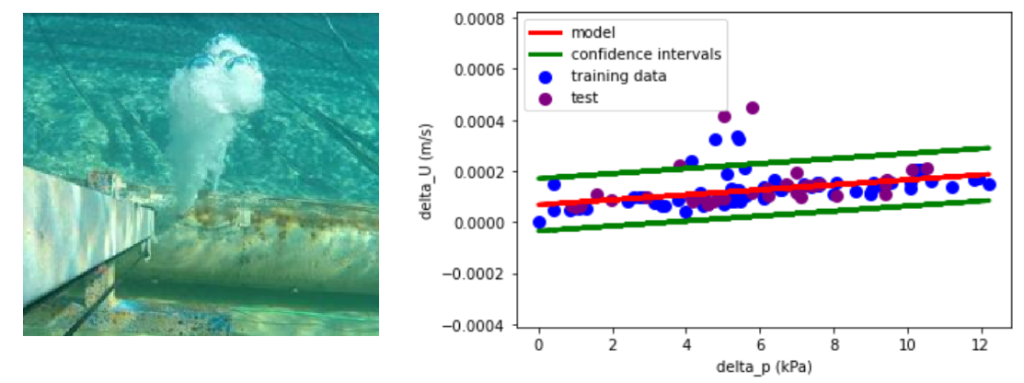
AI can be effective for fault detection across various industries. By analyzing sensor data, machine learning (ML) models can identify anomalies and predict equipment failure before it causes costly downtime. This research has investigated the relationships between pressure and velocity changes using a regression supervised machine learning algorithm to detect faults (leakage) of crude oil flow through a subsea pipeline. Computational fluid dynamics (CFD) was used to train the algorithm under normal pipeline operations over a range of typical flows and simulated fault conditions. Results showed that ML can be a safer, low-cost, and accurate method of monitoring pipelines without the need for special equipment to access the pipeline network. Ongoing research is developing and applying ML models to fault detection of other thermal and fluids engineering equipment.
Optimization of Thermal Engineering Systems
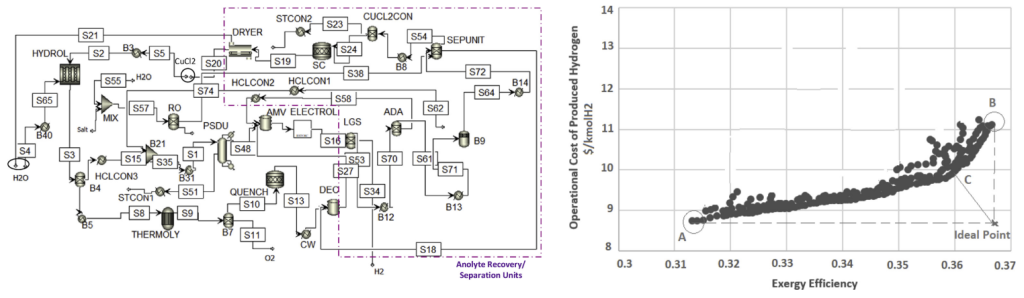
AI can improve energy systems by analyzing operational data and predicting changes to dynamically adjust mass or heat flows so as to reduce energy consumption or increase production rates. Machine learning models can uncover complex relationships among variables that traditional methods may miss. This research applied an artificial neural network (ANN) method with machine learning and a multi-objective genetic algorithm to optimize the performance of a Cu-Cl cycle of hydrogen production. The study aimed to maximize the exergy efficiency while reducing the cost of hydrogen production. Ongoing research aims to apply ML models to the optimization of other complex thermal and fluids engineering systems.