

Entropy-Based Design of Energy Systems
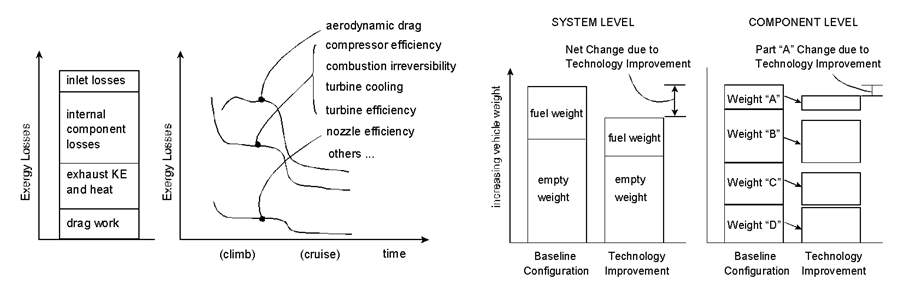
Entropy-Based Design (EBD) integrates the Second Law of Thermodynamics with fluid mechanics and computational modeling. Mass and energy balances alone track only the quantity of energy, but not its quality (i.e., work producing potential). EBD characterizes the energy conversion of devices and systems by mapping the local rates of entropy production. This research is using EBD to improve energy efficiency by targeting regions of highest entropy production for design modifications. This guides engineers toward optimal trade-offs in complex energy systems, such as balancing the pumping power against the heat transfer benefits in power systems. Recent applications of EBD include thermal management of electric veichles and combustion of liquid fuels.
Electrochemical Cells
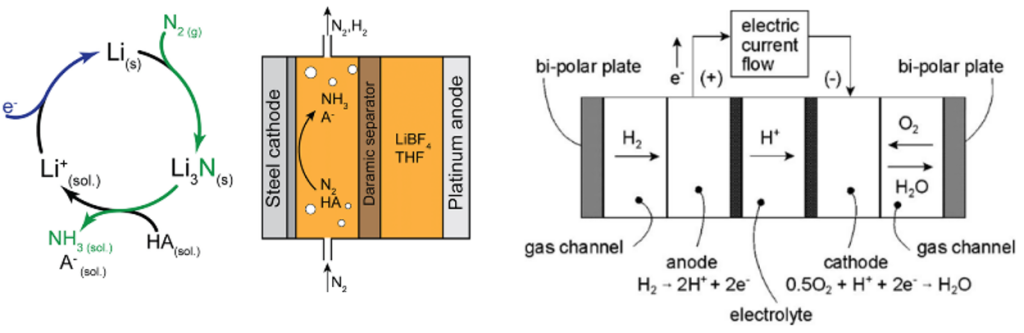
Electrochemical cells are effective in energy conversion because they can directly convert chemical energy into electric power through oxidation-reduction (redox) reactions. In bypassing intermediate steps of combustion that convert heat to mechanical power, they can reduce energy losses with near-zero emissions. Past research on multiphysics modeling has analyzed mass, charge, and entropy transport in fuel cells and electrolzers. Ongoing research is examining new types of electrochemical cells for zero-carbon fuels – including lithium mediated cells for ammonia production and CuCl / HCl electrolysis for hydrogen production.